
How it matches right now
- Tide
- incoming / high
- unknown ✗
- Wind dir
- W, SW, S ~
- Wind speed
- ≤10 mph ideal
- 0 mph ✓
- Wave height
- 1–3.5 ft
- — ~
- Water temp
- 63–80°F
- — ~
- Light
- Daytime
- Daytime ✓
✓ ideal ~ close ✗ outside range
Daytona Beach — Pier
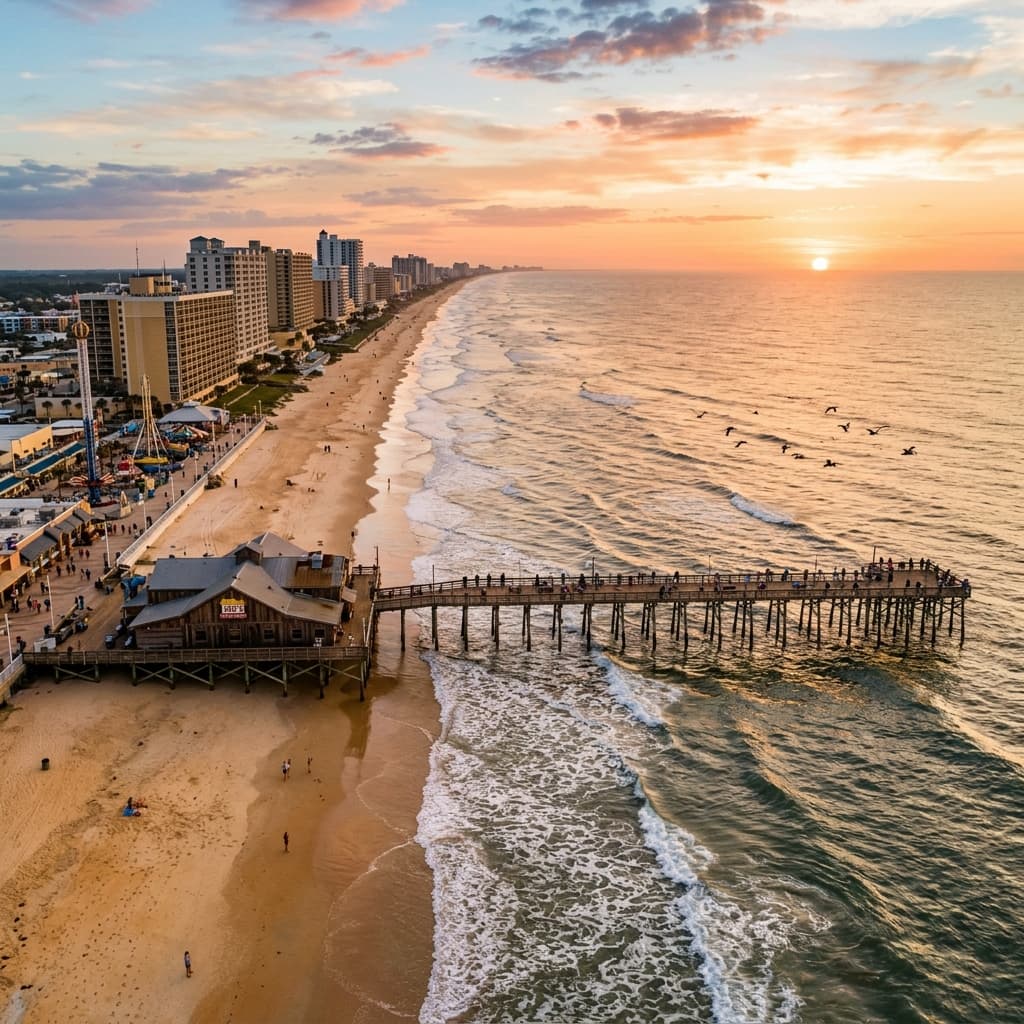
Daytona Beach
Iconic Daytona Beach boardwalk pier extending 1,000 feet into the Atlantic — the most accessible pier on the Volusia Coast. Rod rentals, bait shop on site, no license required. King mackerel and cobia from the T-end draw serious anglers in warm months.
Major solunar window active — fish are primed to feed. This spot targets species that are in their active season right now.
Tide data unavailable
Near a major phase — tidal activity is elevated
✓ ideal ~ close ✗ outside range
Log this trip with conditions auto-captured from the live feed.
Why it scores 61 right now
Hooks, baits, and lanes for Daytona Beach Pier
Double-drop rig with No. 2 hooks, sand fleas or shrimp, 2–3 oz pyramid sinker. Fish the upcurrent side of the pier in the first 200 feet during winter and spring. Pompano travel close to the beach — you don't need to be at the T-end.
Live shrimp or fiddler crab on a 1/0 hook with 15 lb fluoro and a small split shot. Drop straight down next to the pilings. Sheepshead hit like they're nibbling — feel for the lightest tap, then short-stroke the hookset upward.
Sight-fish cobia cruising past the pier in March-May. Pre-rig a 1 oz jig with a 4-inch curly tail in brown or green, 30 lb fluoro leader. When you spot a cobia shadow, pitch the jig 10 feet ahead of the fish, let it sink, and twitch it. They'll either eat it or ignore it — no second chances.
Live goggle-eye, blue runner, or threadfin on a stinger rig (two treble hooks) with wire leader, fished on a balloon or kite from the T-end. 30 lb conventional outfit. When the balloon dips, free-spool for 5 seconds, engage the drag, and reel tight. Don't strike — just reel.
Keep casts in the troughs first; only bomb it long if the first cut is dead.
Fish vertical and tight to pilings; this is a precision bite, not a long-cast bite.
Move with the clean-water pocket and stay close to the first or second trough.
Spot them cruising with rays or near channel markers. Pitch ahead of the fish, not on top of it.
Cast ahead of surface schools parallel to the beach. Speed kills — if you're not moving the lure fast, you're doing it wrong.