
Region
Florida fishing intelligence — Florida Pompano
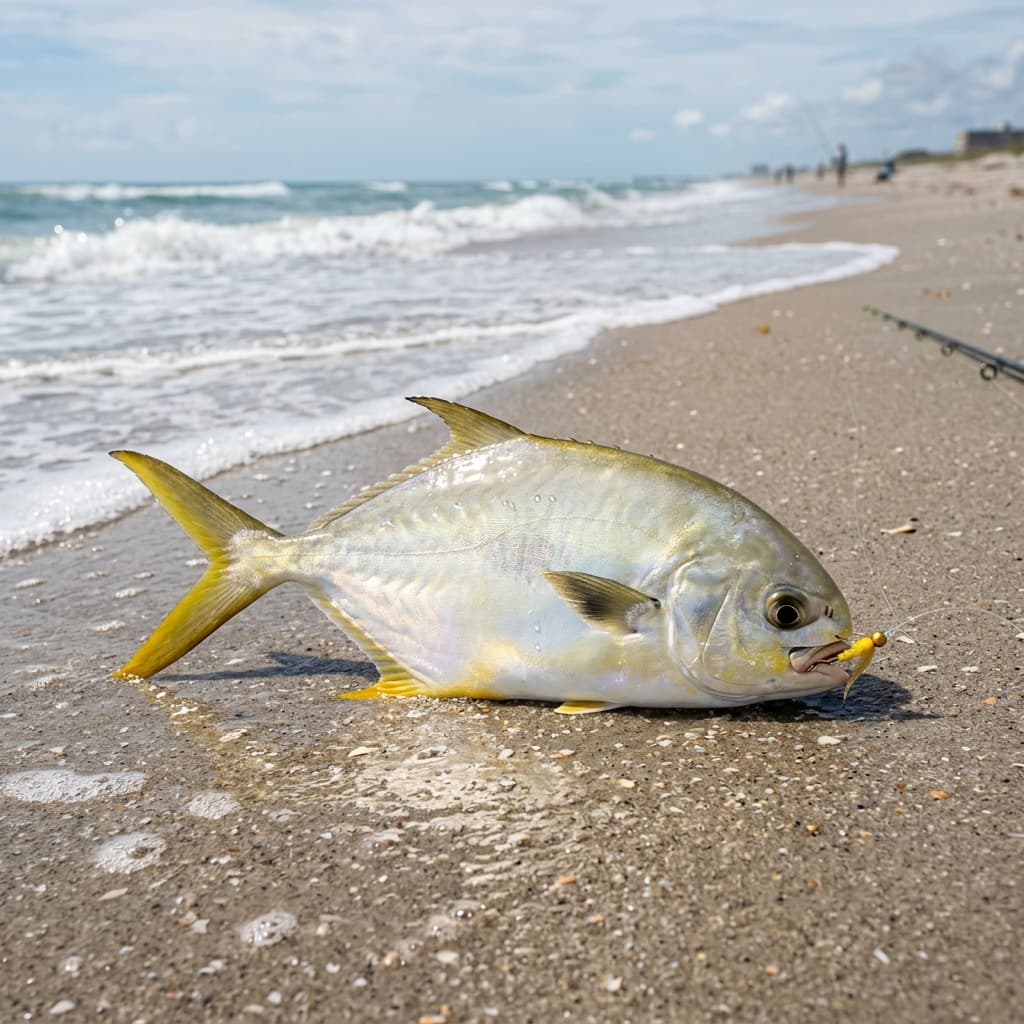
Species guide11 mapped spots
Florida Pompano
Keep casts in the troughs first; only bomb it long if the first cut is dead.
FWC recreational rule set: 11" fork minimum, 6 per harvester, open year-round.
Species Almanac
Water63–77°F
RigDouble-drop pompano rig with a sputnik sinker
BaitPeeled shrimp, sand fleas, Fish Gum/Fishbites
Mapped11
FWC Regulations
FWC recreational rule set: 11" fork minimum, 6 per harvester, open year-round.
Verify current rules →Seasonal Pattern
Best months to plan around Pompano.
JanFebMarAprOctNovDec
Where To Find Them
Mapped Bite Atlas spots grouped by region.
Region
Indian River & Lagoon
Region
Daytona & Volusia
Region
Anna Maria & Sarasota
Region
Treasure Coast & Palm Beach
Region
Jacksonville & Northeast
Spot-Specific Tactics
How anglers target Pompano at mapped spots.
Jetty Park Pier — Pompano & whiting — double drop
Standard double-dropper rig with No. 2 hooks and a 2–4 oz pyramid sinker. Bait with sand fleas, fresh-peeled shrimp, or Fishbites. Work the clean side of the current, not the dead center of the cut. Short casts outproduce long bombs here.
Cocoa Beach Surf — Pompano — double drop rig
Two No. 2 short-shank hooks on dropper loops, 18 inches apart, with a 2–3 oz pyramid sinker on the bottom. Bait with sand fleas (hook through the horn), fresh-peeled shrimp, or Fishbites in orange or pink. Cast to the first trough on incoming tide. Don't reel — let the current move the bait. If no bite in 10 minutes, move 50 yards.
Playalinda / North Beaches — Pompano — mobile scout rig
Same double-drop rig as Cocoa Beach, but the strategy is different here. Walk the beach first with no rod. Look for the sharpest-defined trough with green-clean water. Look for sand flea holes in the wet sand — that's your target zone. Then set up. If no bite in 15 minutes, keep moving south.
Sebastian Inlet — Pompano — south beach
Work the sandy beach just south of the south jetty with a double-drop rig during fall (Oct-Nov) and spring (March-April) migration. Sand fleas and Fishbites. The pompano stage where the inlet current meets the longshore drift.
New Smyrna Beach Surf — Pompano — drive and scout
Drive the beach slowly and look for green water with visible cuts in the sandbars. Park there. Double-drop rig with No. 2 hooks, sand fleas or Fishbites, 2–3 oz pyramid sinker. Cast to the first trough on incoming tide. No bite in 15 minutes — drive 200 yards and try again.
Daytona Beach Pier — Pompano — pier bottom rig
Double-drop rig with No. 2 hooks, sand fleas or shrimp, 2–3 oz pyramid sinker. Fish the upcurrent side of the pier in the first 200 feet during winter and spring. Pompano travel close to the beach — you don't need to be at the T-end.
Coquina & AMI Beach Troughs — Pompano — two-hook trough rig
Use a two-hook pompano rig with small floats, No. 1 or No. 2 hooks, and enough pyramid or sputnik weight to hold. Tip with sand fleas, peeled shrimp, or shrimp Fishbites. Start in the first trough before casting past the bar.
Lake Worth Pier — Pompano — pier migration
Double-drop rig with No. 2 hooks, sand fleas, fresh shrimp, or Fishbites in pink/orange. Fish the upcurrent side of the pier during incoming tide in February-April. Pompano travel in schools tight to the beach — fish the first 200 feet of pier, not necessarily the T-end.
Jacksonville Beach Pier — Pompano — spring/fall migration
Double-drop rig with No. 2 hooks, sand fleas, fresh shrimp, or Fishbites. 2–3 oz pyramid sinker. Fish the upcurrent side of the pier in the first 300 feet during incoming tide. Pompano migration peaks are March-May and October-November. Move along the pier until you find the school.
Huguenot Memorial Park Beach — Pompano — hi-lo pompano rig
Two-hook pompano rig with #2 or #4 gold Aberdeen hooks baited with fresh sand fleas or small pieces of fresh shrimp. 1–2 oz pyramid sinker to hold in the trough. Cast to the second trough. Let the rig bounce in the wave action — pompano hit on the pause. Rotate rigs every 10 minutes to keep fresh scent in the water.
Bathtub Beach — Pompano — reef trough
Two-hook pompano rig with size 2 gold hooks, fresh sand fleas or small shrimp. Cast to the sandy trough just inside the reef line. Pompano work these troughs on incoming tide. Keep the bait moving with occasional lifts and drops. October-April is the primary window.
Recommended gear
Tackle matched to these tactics and conditions.
Pre-tied Rigs
$11.99Hayabusa Pompano Rig (6-pack)
Pre-tied double-drop rigs with orange floats and gold hooks. Saves time on the beach and produces as well as custom-tied rigs for most anglers.
PompanoWhitingBlack drum
Artificial Bait
$5.99Fishbites E-Z Flea (Sand Flea Flavor)
When you can't find live sand fleas, these are the next best thing. Tip them on your pompano rig hooks for scent attraction. They stay on the hook better than real fleas in heavy current.
PompanoWhitingSheepshead