
How it matches right now
- Tide
- outgoing / incoming
- high ~
- Wind dir
- W, SW, NW
- — ~
- Wind speed
- ≤10 mph ideal
- — ~
- Wave height
- 1–4 ft
- — ~
- Water temp
- 70–85°F
- — ~
- Light
- Any
- Daytime ✓
✓ ideal ~ close ✗ outside range
Jupiter — Inlet
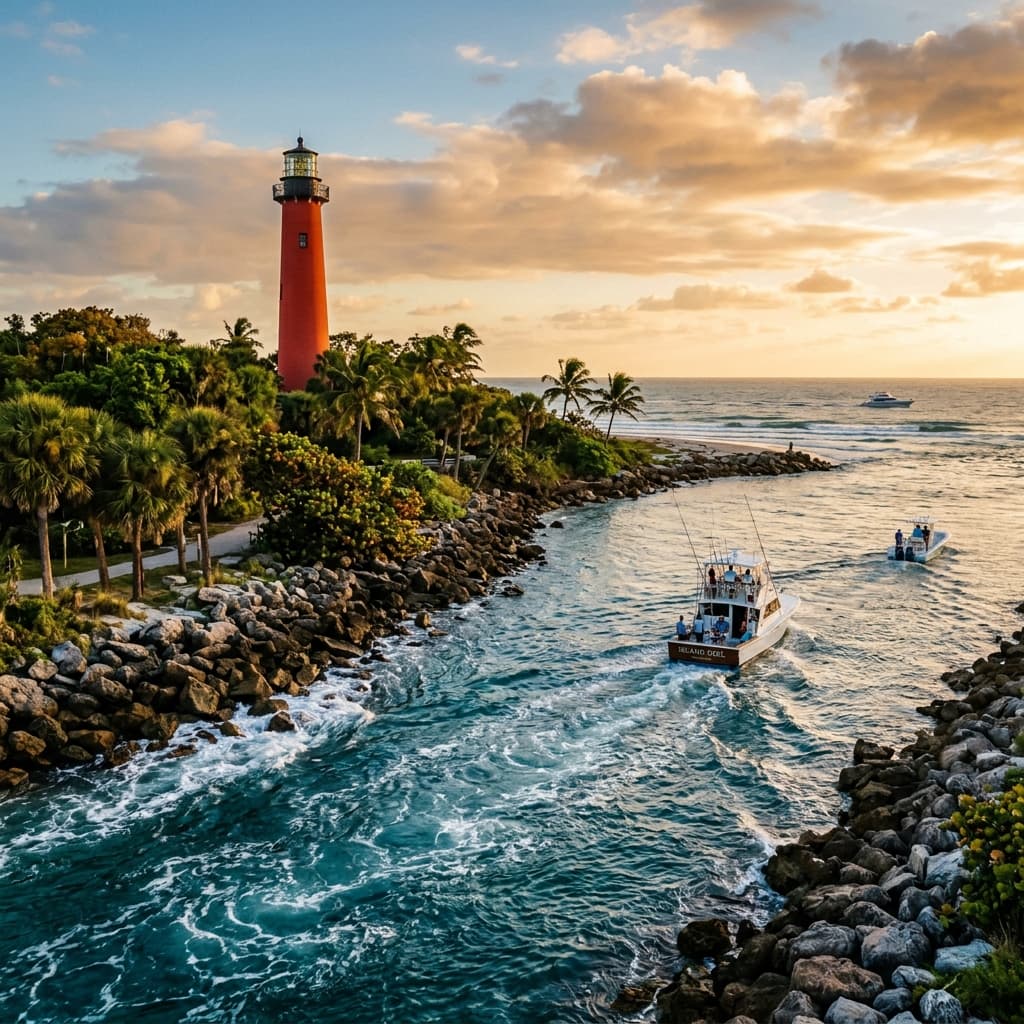
Jupiter
The iconic South Florida inlet beneath the red Jupiter Lighthouse — deep, powerful current funneling the Loxahatchee River into the Atlantic. World-class snook on the rocks, goliath grouper at the base, and spring cobia runs that draw anglers from across the state.
Major solunar window active — fish are primed to feed. This spot targets species that are in their active season right now.
Near a major phase — tidal activity is elevated
✓ ideal ~ close ✗ outside range
Log this trip with conditions auto-captured from the live feed.
Why it scores 53 right now
Hooks, baits, and lanes for Jupiter Inlet
Large live mullet (8–10 inches) or oversized swimbaits (6–8 inch) bumped along the jetty rocks on outgoing tide. 50 lb fluoro leader on 40 lb braid. Fish the shadow lines where rock structure meets open water. Night from 9 PM to 2 AM is the prime window for trophy-class fish.
Pre-rig a 2 oz bucktail jig with a 4-inch curly tail in brown or green, 30 lb fluoro leader. Stand high on the rocks and watch for dark shapes cruising 1–3 feet below the surface in March-May. Pitch the jig 15 feet ahead of the fish, let it sink to their depth, and twitch. One shot — they eat or they don't.
Small No. 1 hook with a tiny piece of shrimp or cut sardine on 12 lb fluoro leader. Drop straight to the base of the jetty rocks on the downcurrent side. Snapper hold deep and tight to structure. Chum with cut shrimp pieces to bring them out. Light tackle only — they're extremely leader-shy in clear water.
Live mullet or live crab on a 7/0 circle hook with 80 lb fluoro leader on 50 lb braid or conventional gear. Free-line in the main channel current during dawn in June-August. When tarpon are rolling on the surface, cast ahead of the roll direction. The eat is a sudden, heavy weight — don't set on the jump.
Fish edges, current seams, and low-light bait movement instead of blind fan casting.
Fish passes, bridges, and beach migration lanes at dawn. Match the bait, not the lure catalog.
Spot them cruising with rays or near channel markers. Pitch ahead of the fish, not on top of it.
Fish tight to docks, bridge pilings, mangrove roots, and jetty rock. Light line and stealth matter more than lure choice.
Watch for bait blowups on the surface. Cast into the mayhem, strip fast. Jacks are reaction feeders, not ambush fish.
Look for them floating sideways near buoys, crab trap floats, and channel markers. Stealth approach in the boat is critical.