
How it matches right now
- Tide
- outgoing / incoming
- unknown ✗
- Wind dir
- W, SW, NW ~
- Wind speed
- ≤10 mph ideal
- 0 mph ✓
- Wave height
- 1–4 ft
- — ~
- Water temp
- 65–82°F
- — ~
- Light
- Any
- Daytime ✓
✓ ideal ~ close ✗ outside range
Ponce Inlet — Inlet
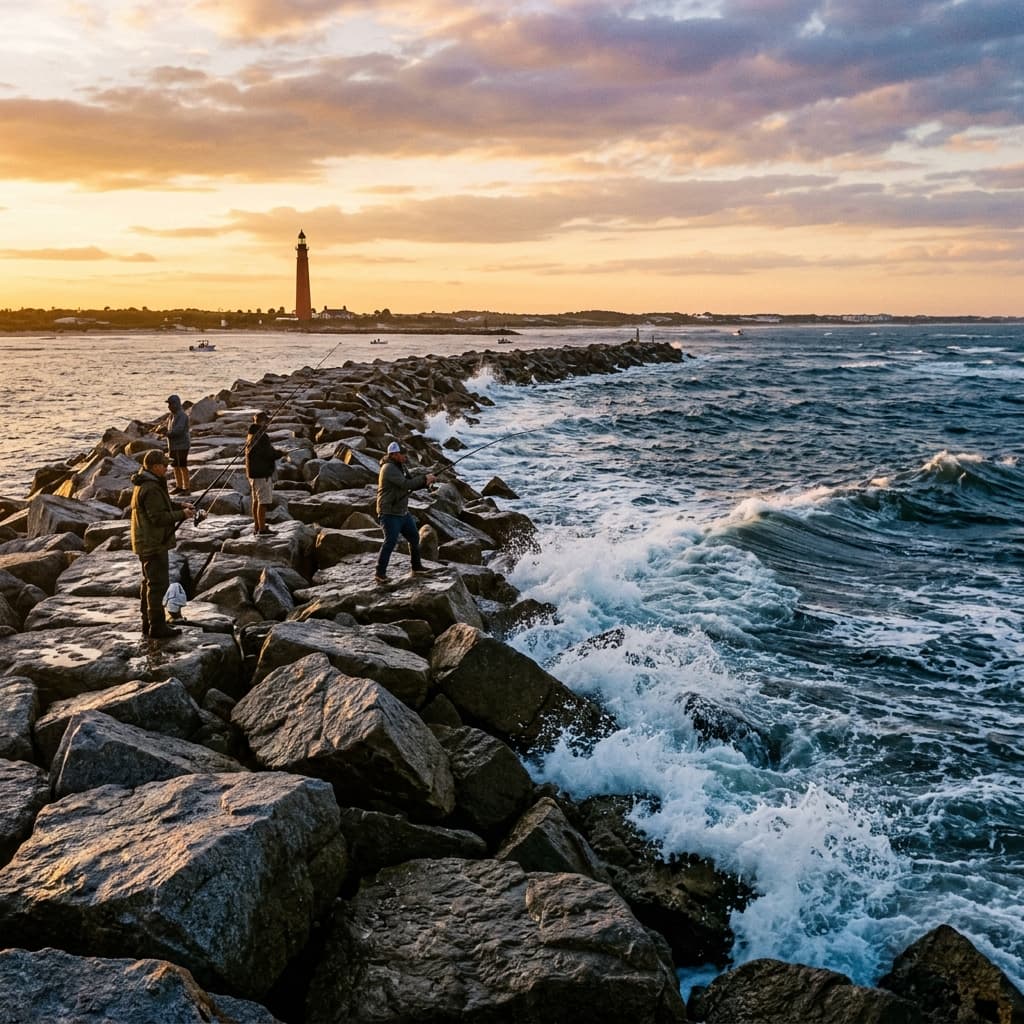
Ponce Inlet
One of Northeast Florida's deepest and most productive inlets — the Halifax River empties through a narrow rock cut with 30+ feet of depth at the mouth. Big snook, flounder migration, and summer tarpon all accessible from the jetty rocks.
Major solunar window active — fish are primed to feed. This spot targets species that are in their active season right now.
Tide data unavailable
Near a major phase — tidal activity is elevated
✓ ideal ~ close ✗ outside range
Log this trip with conditions auto-captured from the live feed.
Why it scores 57 right now
Hooks, baits, and lanes for Ponce Inlet Jetty
Heavy 3/4 oz jighead with a 6-inch paddletail in white or chartreuse on 40 lb fluoro. Cast upcurrent and bump the jig along the bottom near the rock edges. Snook ambush from the rock crevices. The hit feels like a hard stop — set immediately and reel hard to keep them out of the rocks.
3/8 oz white bucktail tipped with a strip of fresh mullet belly. Cast to the sandy transitions between rock and sand at the jetty base. Drag slowly along the bottom — flounder hit and hold. Wait 3 full seconds, then set with a long sweep.
Large live mullet (8–10 inches) free-lined in the main channel during June-August dawn windows. 50 lb leader, 6/0 circle hook, heavy spinning or conventional gear. When the tarpon rolls on the surface, cast 20 feet ahead of the direction it's moving. Let it eat — don't set on the jump.
1 oz Gotcha plug or silver casting spoon on 12 lb braid. Maximum speed retrieve — mackerel hit moving targets. No wire leader needed but add 12 inches of 30 lb fluoro to prevent cutoffs from teeth. Work the inlet mouth on incoming tide.
Fish edges, current seams, and low-light bait movement instead of blind fan casting.
Treat the channel edges as ambush lanes and fish moving current, not dead water.
Drag baits across sand-mud transitions and channel drop-offs. Flounder ambush — they don't chase. Slow down.
Fish passes, bridges, and beach migration lanes at dawn. Match the bait, not the lure catalog.
Cast ahead of surface schools parallel to the beach. Speed kills — if you're not moving the lure fast, you're doing it wrong.
Fish tight to docks, bridge pilings, mangrove roots, and jetty rock. Light line and stealth matter more than lure choice.