
How it matches right now
- Tide
- outgoing / incoming
- unknown ✗
- Wind dir
- W, SW, S ~
- Wind speed
- ≤10 mph ideal
- 0 mph ✓
- Wave height
- 1–4 ft
- 1.0 ft ~
- Water temp
- 65–82°F
- 84.6°F ~
- Light
- Any
- Daytime ✓
✓ ideal ~ close ✗ outside range
Sebastian — Inlet
Sebastian
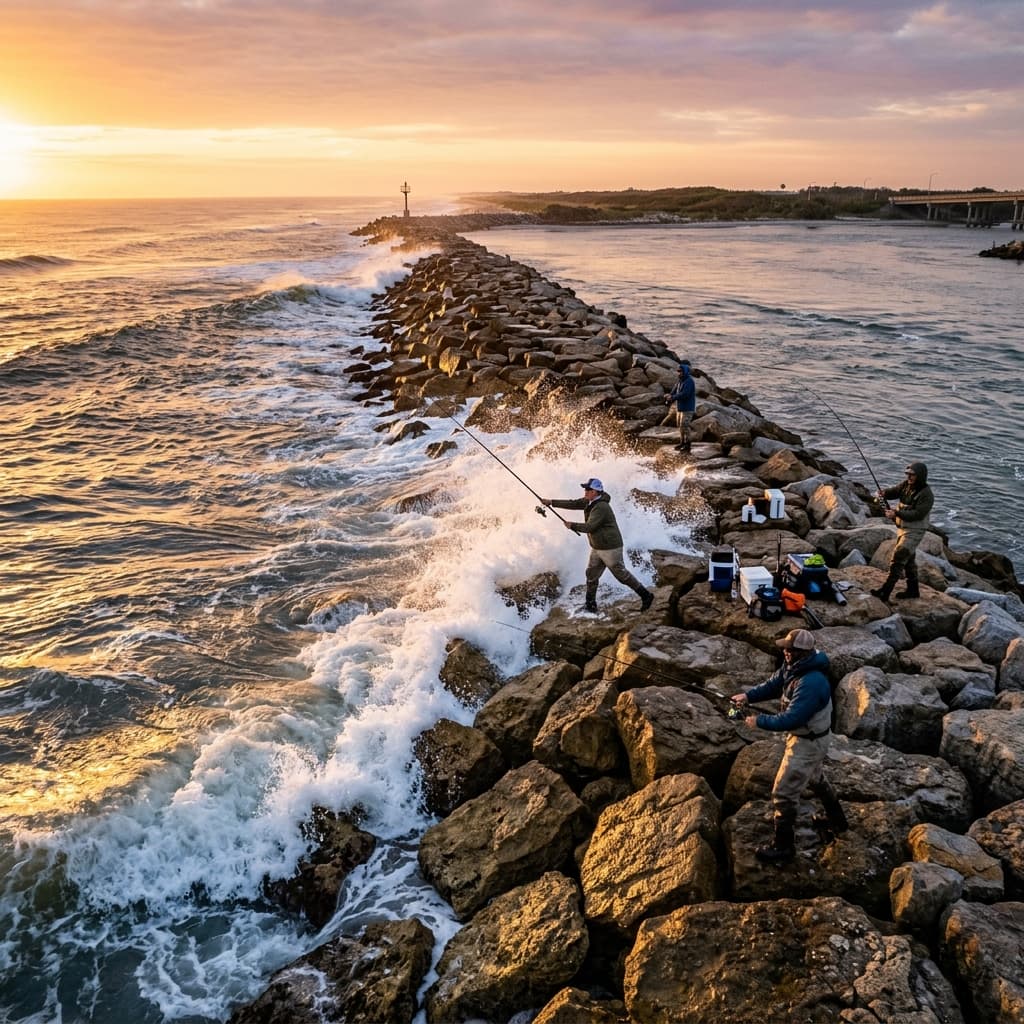
Florida's most famous snook inlet — Sebastian Inlet State Park funnels Indian River Lagoon water into the Atlantic through a narrow, high-current rock cut. Monster snook, explosive jack crevalle blitzes, and year-round diversity from shore.
Major solunar window active — fish are primed to feed. This spot targets species that are in their active season right now.
Tide data unavailable
Near a major phase — tidal activity is elevated
✓ ideal ~ close ✗ outside range
Log this trip with conditions auto-captured from the live feed.
Why it scores 48 right now
Hooks, baits, and lanes for Sebastian Inlet
6–8 inch white or chartreuse paddletail on a 3/4 oz jighead, 40 lb fluoro leader on 30 lb braid. Cast upcurrent and let the bait swing through the shadow line created by the catwalk lights. The hit will feel like you snagged the bottom — then the bottom will start running. Keep the drag set at 25% of line strength.
Work the sandy beach just south of the south jetty with a double-drop rig during fall (Oct-Nov) and spring (March-April) migration. Sand fleas and Fishbites. The pompano stage where the inlet current meets the longshore drift.
When you see bait spraying on the surface at the inlet mouth, throw a 1 oz Gotcha plug or silver spoon on 12–15 lb braid. Burn the retrieve. Mackerel won't hit a slow-moving bait. Wire leader optional — they'll cut 20 lb fluoro occasionally.
Bounce a 3/8 oz white bucktail tipped with a strip of fresh-cut mullet belly along the sand-rock transitions at the base of the jetty. Flounder lie flat waiting for bait to come to them. The bite feels like a heavy weight — wait 3 seconds before setting.
When the jacks are busting bait on the surface, any topwater or fast-retrieve spoon will work. Use 30 lb braid minimum — jacks fight above their weight class. The first run will burn 40 yards of line before you can think.
Fish edges, current seams, and low-light bait movement instead of blind fan casting.
Treat the channel edges as ambush lanes and fish moving current, not dead water.
Keep casts in the troughs first; only bomb it long if the first cut is dead.
Cast ahead of surface schools parallel to the beach. Speed kills — if you're not moving the lure fast, you're doing it wrong.
Watch for bait blowups on the surface. Cast into the mayhem, strip fast. Jacks are reaction feeders, not ambush fish.
Drag baits across sand-mud transitions and channel drop-offs. Flounder ambush — they don't chase. Slow down.