
How it matches right now
- Tide
- incoming / high
- unknown ✗
- Wind dir
- W, WSW, SW, S, SSW ~
- Wind speed
- ≤10 mph ideal
- 0 mph ✓
- Wave height
- 1.5–3 ft
- 1.0 ft ~
- Water temp
- 63–78°F
- 86.4°F ✗
- Light
- Daytime
- Daytime ✓
✓ ideal ~ close ✗ outside range
Cocoa Beach — Surf
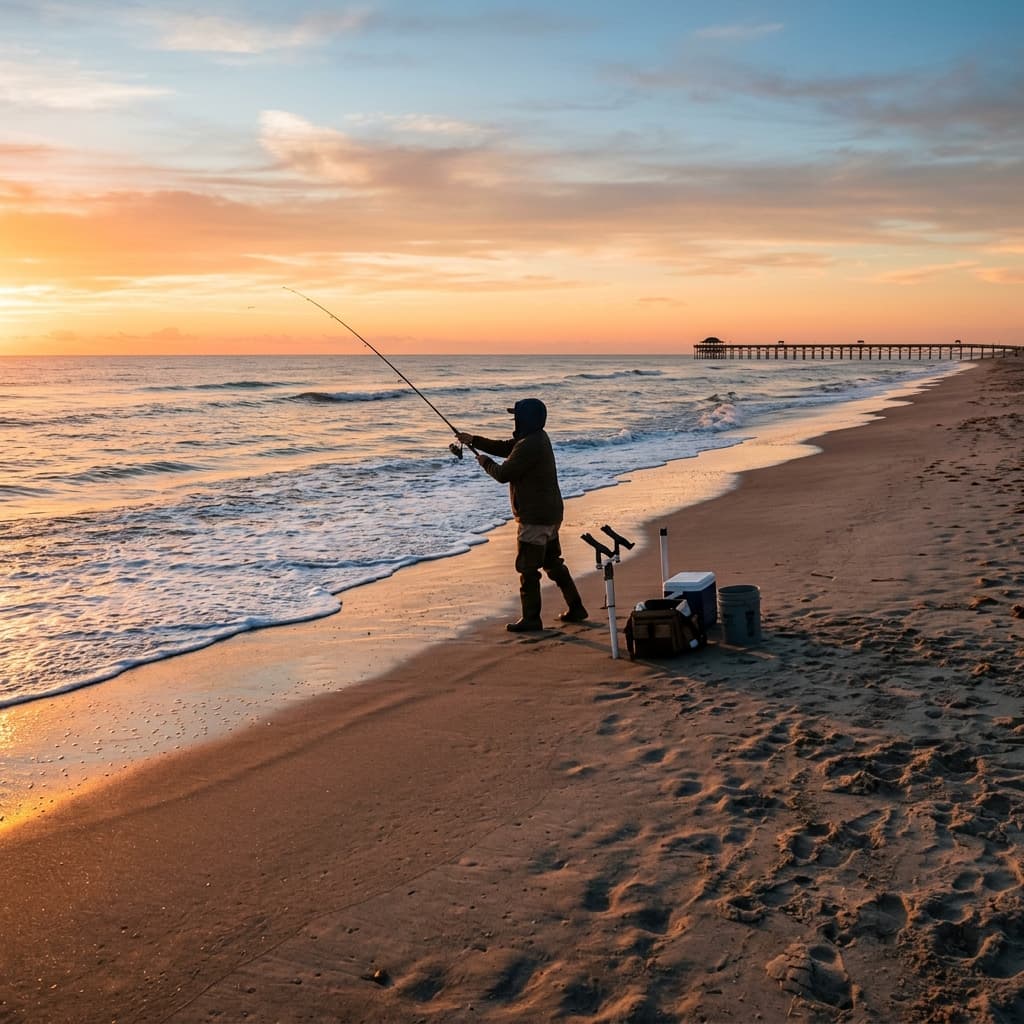
Cocoa Beach
The mobile, trough-reading play for pompano, whiting, and drum. Five miles of fishable beach between 5th Street and Patrick AFB — walk until the water tells you to stop.
Major solunar window active — fish are primed to feed. This spot targets species that are in their active season right now.
Near a major phase — tidal activity is elevated
✓ ideal ~ close ✗ outside range
Log this trip with conditions auto-captured from the live feed.
Why it scores 52 right now
Hooks, baits, and lanes for Cocoa Beach Surf
Two No. 2 short-shank hooks on dropper loops, 18 inches apart, with a 2–3 oz pyramid sinker on the bottom. Bait with sand fleas (hook through the horn), fresh-peeled shrimp, or Fishbites in orange or pink. Cast to the first trough on incoming tide. Don't reel — let the current move the bait. If no bite in 10 minutes, move 50 yards.
Single No. 4 hook on a 12-inch fluorocarbon leader with a 1 oz pyramid sinker. Small pieces of shrimp, cut sandworm, or Fishbites. Cast into the inside edge of the first trough. Whiting hit fast and hard — you'll feel a sharp double-tap. Set immediately.
3/0 circle hook on 25 lb fluorocarbon, 2 oz egg sinker running on the main line above a barrel swivel. Half a blue crab, large shrimp, or cut clam. Cast past the second bar and let it sit. They'll hit slow — wait for the rod tip to load before you lift.
September through November when mullet are running the beach. Throw a 4-inch white paddletail on a 3/8 oz jighead with 30 lb fluoro leader on 15 lb braid. Parallel the beach at first light. The hit feels like you snagged a log that starts moving.
Walk the beach at low tide first. Look for darker green water between the sandbars — that's the trough. Look for cuts in the outer bar where water flows through — that's where fish enter and exit. Sand fleas digging in wet sand = pompano territory.
Keep casts in the troughs first; only bomb it long if the first cut is dead.
Move with the clean-water pocket and stay close to the first or second trough.
Work slower water right off structure or on the calmer side of the surf cut.
Fish edges, current seams, and low-light bait movement instead of blind fan casting.
Treat the channel edges as ambush lanes and fish moving current, not dead water.