
How it matches right now
- Tide
- incoming / high
- unknown ✗
- Wind dir
- W, WSW, SW, S ~
- Wind speed
- ≤10 mph ideal
- 0 mph ✓
- Wave height
- 1–3 ft
- 1.0 ft ~
- Water temp
- 63–78°F
- 86.4°F ✗
- Light
- Daytime
- Daytime ✓
✓ ideal ~ close ✗ outside range
Canaveral National Seashore — Wild beach
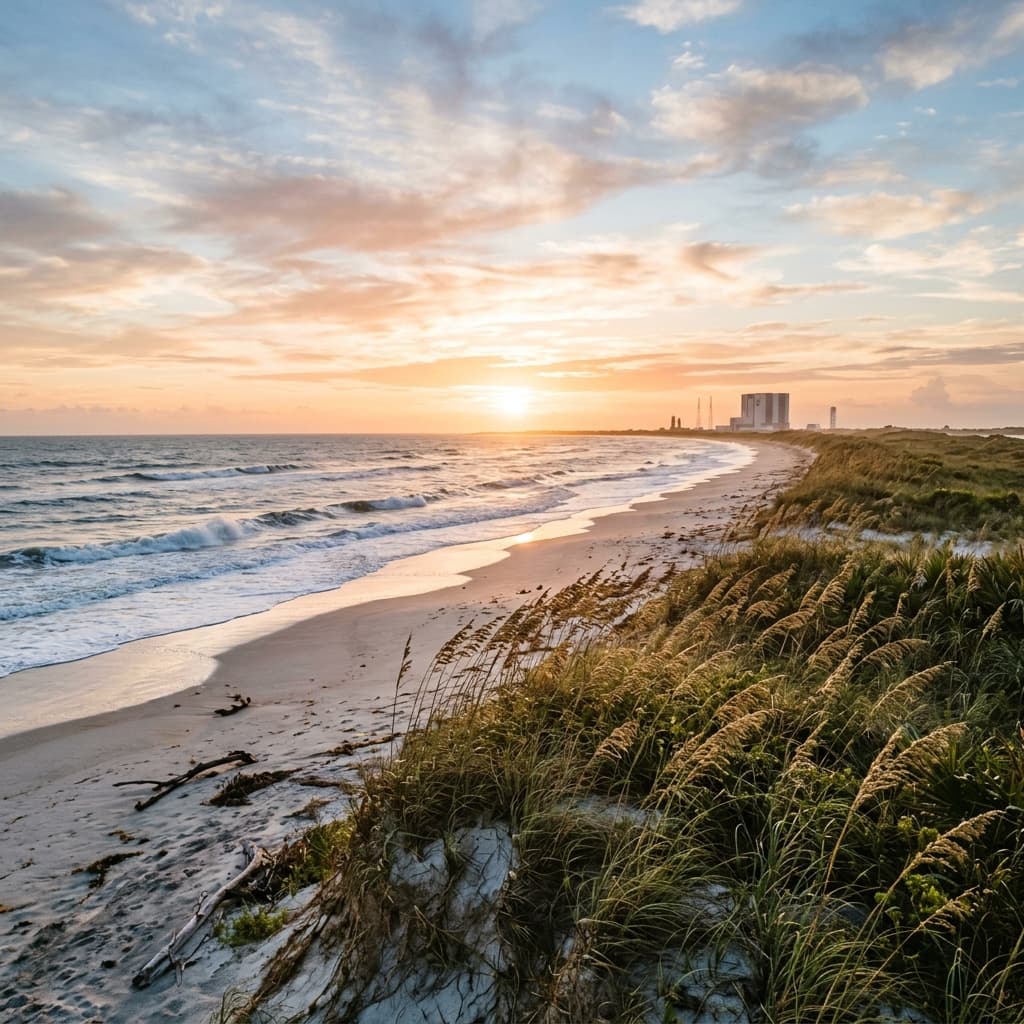
Canaveral National Seashore
Thirteen miles of undeveloped federal beach inside Canaveral National Seashore — no condos, no crowds, no bait shops. This is the scouting fishery where you read water, walk until you find the cut, and have the beach to yourself.
Major solunar window active — fish are primed to feed. This spot targets species that are in their active season right now.
Near a major phase — tidal activity is elevated
✓ ideal ~ close ✗ outside range
Log this trip with conditions auto-captured from the live feed.
Why it scores 49 right now
Hooks, baits, and lanes for Playalinda / North Beaches
Same double-drop rig as Cocoa Beach, but the strategy is different here. Walk the beach first with no rod. Look for the sharpest-defined trough with green-clean water. Look for sand flea holes in the wet sand — that's your target zone. Then set up. If no bite in 15 minutes, keep moving south.
No. 4 hook, 1 oz pyramid, small shrimp or Fishbites. Cast 30 yards into the first trough. Whiting travel in schools — once you catch one, stay put. They'll bite every 2–3 minutes until the school moves. This is your backup plan when pompano aren't cooperating.
Larger bait (half crab, large shrimp) on a 3/0 circle hook with a Carolina rig. Target the deeper sections between sandbars where the water looks noticeably darker. Drum hold in these deeper pockets waiting for food to wash through the cuts.
Check three things before the drive: 1) NPS park status (operational?), 2) NASA/SpaceX launch schedule (any window today?), 3) NWS surf forecast (fishable conditions?). If any of the three fails, pivot to Jetty Park or Cocoa Beach instead of burning the morning.
Keep casts in the troughs first; only bomb it long if the first cut is dead.
Move with the clean-water pocket and stay close to the first or second trough.
Work slower water right off structure or on the calmer side of the surf cut.
Fish edges, current seams, and low-light bait movement instead of blind fan casting.
Treat the channel edges as ambush lanes and fish moving current, not dead water.