
How it matches right now
- Tide
- incoming / high
- unknown ✗
- Wind dir
- N, NNE, NE, ENE, E, SE ~
- Wind speed
- ≤10 mph ideal
- 0 mph ✓
- Wave height
- 1–3.5 ft
- 1.0 ft ~
- Water temp
- 68–80°F
- 86.4°F ✗
- Light
- Any
- Daytime ✓
✓ ideal ~ close ✗ outside range
Cape Canaveral — Pier
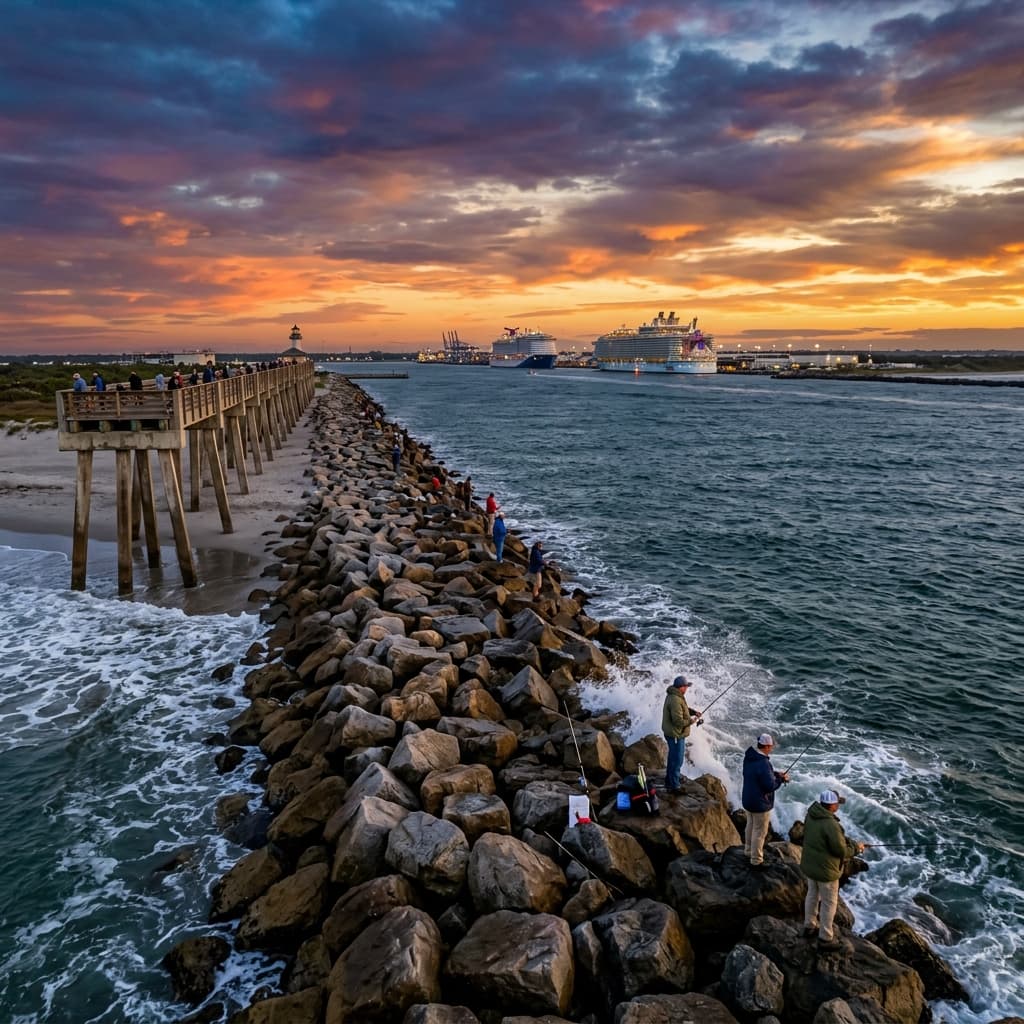
Cape Canaveral
The Malcolm E. McLouth Fishing Pier — a 1,200-foot lit pier at the mouth of Port Canaveral inlet. Structure, current, deep water, and cruise ship wakes all in one controlled-access spot. Best first-stop when the inlet is alive.
Major solunar window active — fish are primed to feed. This spot targets species that are in their active season right now.
Near a major phase — tidal activity is elevated
✓ ideal ~ close ✗ outside range
Log this trip with conditions auto-captured from the live feed.
Why it scores 24 right now
Hooks, baits, and lanes for Jetty Park Pier
Fish tight to the pier pilings with live fiddler crabs or shrimp on a 1/0 hook with a short 18-inch fluorocarbon leader. Use just enough weight to hold bottom. They hit light — set the hook on the second tap, not the first.
Fish-finder rig with a 3 oz egg sinker, 30 lb leader, and a 3/0 circle hook baited with half a blue crab or cut shrimp. Cast near the jetty rocks on the incoming tide. Let them eat — circle hooks set themselves.
Standard double-dropper rig with No. 2 hooks and a 2–4 oz pyramid sinker. Bait with sand fleas, fresh-peeled shrimp, or Fishbites. Work the clean side of the current, not the dead center of the cut. Short casts outproduce long bombs here.
Free-line a live pin fish or finger mullet with no weight on 20 lb fluorocarbon leader along the current seam during dusk or after dark. Fish the change in current direction, not the center of the flow. Set the drag loose — they'll run.
When the tide pushes in and you see bait flipping on the surface, throw a 1 oz silver spoon or Got-Cha plug on a 7.5 ft medium rod with 12 lb braid. Fast retrieve, no pause. The bite is violent and short — be ready with a second cast.
At night under the pier lights, free-line live shrimp on a small 1/0 hook with 15 lb fluoro leader. Let it drift naturally into the shadow line. They're leader-shy — the lighter you go, the more you'll hook.
Throw a cast net in the sandy areas near the jetty base for pilchards and greenbacks. Or use a sabiki rig off the pier to load up on bait. Avoid casting the net near the rocks — you'll shred it.
Fish vertical and tight to pilings; this is a precision bite, not a long-cast bite.
Work slower water right off structure or on the calmer side of the surf cut.
Keep casts in the troughs first; only bomb it long if the first cut is dead.
Fish edges, current seams, and low-light bait movement instead of blind fan casting.
Move with the clean-water pocket and stay close to the first or second trough.
Fish tight to docks, bridge pilings, mangrove roots, and jetty rock. Light line and stealth matter more than lure choice.
Cast ahead of surface schools parallel to the beach. Speed kills — if you're not moving the lure fast, you're doing it wrong.
Treat the channel edges as ambush lanes and fish moving current, not dead water.
Hours: 07:00 – 21:00 local time